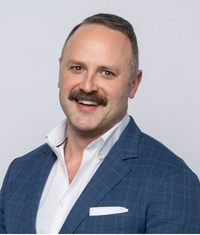
 By Johnny Cooper, Founder & CEO, Cooper Coleman
Searches start with talk of transformation. They end with a hire that feels safe.
Familiar. Comfortable. Defensible.
It’s a pattern, not an accident.
Put a large group in the room with uneven risk tolerance and the outcome drifts, not toward the boldest choice, but toward the one everyone can live with. The least friction. The lowest common denominator.
And that almost always looks like the status quo.
At the front end of a search, boards and executives tend to describe an ambitious future state. They talk about growth, evolution, sharper positioning, new energy.
They use language that indicates an appetite for change, but as the process unfolds, something shifts. The abstract idea of change becomes a very real person sitting across the table.
That’s where the misalignment shows up.
The candidate who most closely represents that future state typically brings some tension with them. Not dysfunction, but difference. A perspective that doesn’t quite mirror the room, a track record that suggests they will challenge how things have been done, and a presence that may feel unfamiliar, even a bit uncomfortable.
And this is usually the moment when the assignment quietly changes.
“Transformational” becomes “proven.”
“Bold” becomes “steady.”
“New perspective” becomes “cultural fit.”
None of those are wrong on their own, but together, they tend to lead right back to how things have always been done, or at best, a slightly more progressive version of the status quo.
The safer candidate is easier to align around. There are fewer open questions and less perceived risk, so consensus comes more easily, and because that choice works well enough in the short term, the safe bet is made.
The change that was originally named is now unlikely.
Real growth requires a degree of risk tolerance that many organizations overestimate at the outset. I’m not talking reckless risk, but the willingness to choose a leader who will stretch the organization beyond its current state, not just reflect it.
Someone who sees around corners a bit differently and challenges assumptions. Someone who may not look like what you expected and brings a little productive tension instead of smoothing everything over.
That kind of leadership can feel uncomfortable at first—and it should. It requires more from the board, asks more of the team, and demands a different kind of partnership…and it is precisely where the upside lives.
The gap between what organizations say they need and what they ultimately choose is rarely about capability. It’s about appetite, and the funny thing about appetite is that it tends to disappear when it’s time to decide and the risk has a face. When the cost of getting it wrong feels greatest…and personal.
That’s the moment that matters: Not the kickoff. Not the scope. The choice.
At that point, the work is simple and difficult. Choose the leader who represents the future you named, not the one who makes the present feel more comfortable. And be clear about the tradeoff. Are you optimizing for alignment, or for outcome? Those are not always the same decision.
If you choose a leader who will stretch the organization, you also have to be prepared to support them when that stretch begins.
The question is not whether an organization can find a transformational leader. Most can. The harder question is whether they are prepared to choose one when that leader doesn’t feel immediately familiar.
If everyone in the room feels completely comfortable with the final choice, it may be worth asking whether anything is actually going to change.
This is where the search process either holds or breaks. Someone has to hold the line. To bring the group back to what they said they wanted. To name, in real time, when the brief is shifting and the decision is drifting toward comfort instead of conviction.
The real test is who in the room is actually willing to do that. Without them, the outcome is predictable.